EQ321EF1

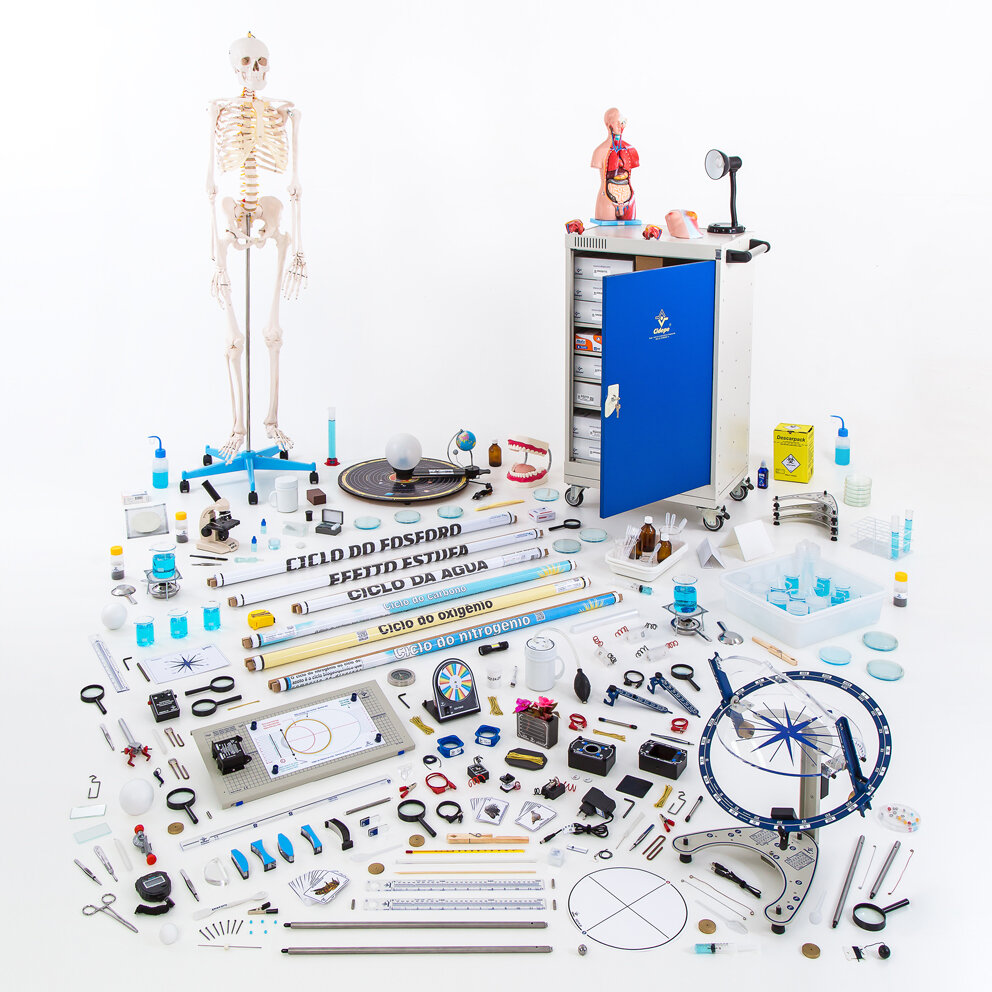
Intended for experimental study, this science laboratory is designed for conducting experiments on: BNCC (Brazilian National Curriculum Base). Matter and energy. Physical states of water. Heat and changes of state. Air and its properties. Sound and sound energy. Force and deformations. Light and transparency of materials. Separation and purification of substances. Thermal sensation and temperature. Position and arrangement of objects. Dynamics. Simple machines (pulleys). Helical spring and Hooke's Law. Work and energy in a mass-spring system. Conservation of energy. Hydrostatics and buoyancy (Archimedes' Principle). Wave motion and simple pendulum. Simple harmonic motion. Properties of materials. Chemical bonds. Electrical conductivity. Types of conductors. Electrolysis. Electrolytic and ionic solutions. Light and optics. Rectilinear propagation and independence of rays. Reflection and refraction of light. Plane and spherical mirrors. Formation and number of images. Astronomical and terrestrial telescope. Vision defects and correction with lenses. Earth and Universe. Soil types. Water content in the soil. Free surface of water. Phases of the Moon. Observation and analysis experiments of natural phenomena. Solar system. Planets and their orbits. Cardinal points. Seasons. Positions of the Sun at sunrise and sunset in different seasons. Earth's movement in relation to the Sun. Aphelion and perihelion. Earth's rotation and revolution movements. Time zones. Ice accumulation at the poles. The Moon and its rotation, revolution, and revolution movements. Phases of the Moon and eclipses. Apogee and perigee. Earth's position in the solar system. Arrangement of the planets from the Sun and their orbits. Apparent movement of the sun anywhere on the globe, sunrise, sunset, length of day, seasons, sundial. How to identify different types of soil? The water content in the soil. The free surface of still water is horizontal. The phases of the Moon. Life and evolution. Inclusive education. Experiments for people with normal vision, blind people, or people with low vision. Tactile writing in Braille. Life and evolution. Light and vision. Touch and perception. Comparison of tactile sensitivity. Olfactory tests. Importance of smell in sensory perception. The ukulele as an inclusive musical instrument. Sound production in stringed instruments. Microscopy. Human anatomy and physiology. Dental arch. Seed identification. Need for water for germination. Importance of water for life. Decomposition of fruits by mold. Kingdom Plantae. Identification of humus-rich, sandy, and clayey soils. Structures of a flower. Flower, pollen, sepals, petals, stamen, and anther. Gynoecium and ovules. Germination power of seeds. Influence of the environment on germination. Evolution of living beings. Lamarckism, Darwinism, and synthetic theory. Phototropism in plants. Influence of the auxin hormone on germination. Reproductive structures of bryophytes and pteridophytes. Rhizoids, cauloids, and phyllids. Leaves, sporangia, and spores of pteridophytes. Ecology. Chlorophyll. Water purification. Separation and recycling of materials. Seed germination. Evolution of living beings. Monocular microscope. Biogeochemical cycles. Climate change and the greenhouse effect. How to classify invertebrates. Mammalian animals. How to classify birds, etc.

Natural sciences. Matter and energy. Life and evolution. Earth and the universe.