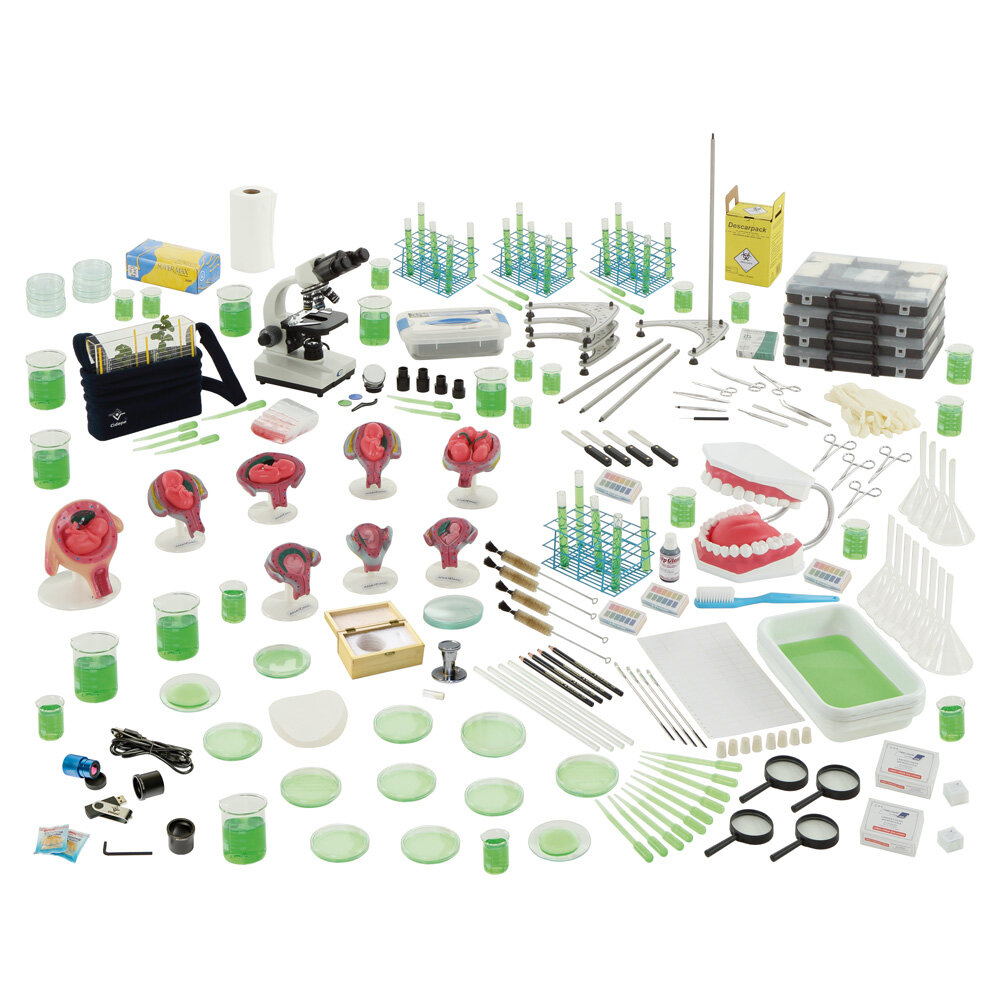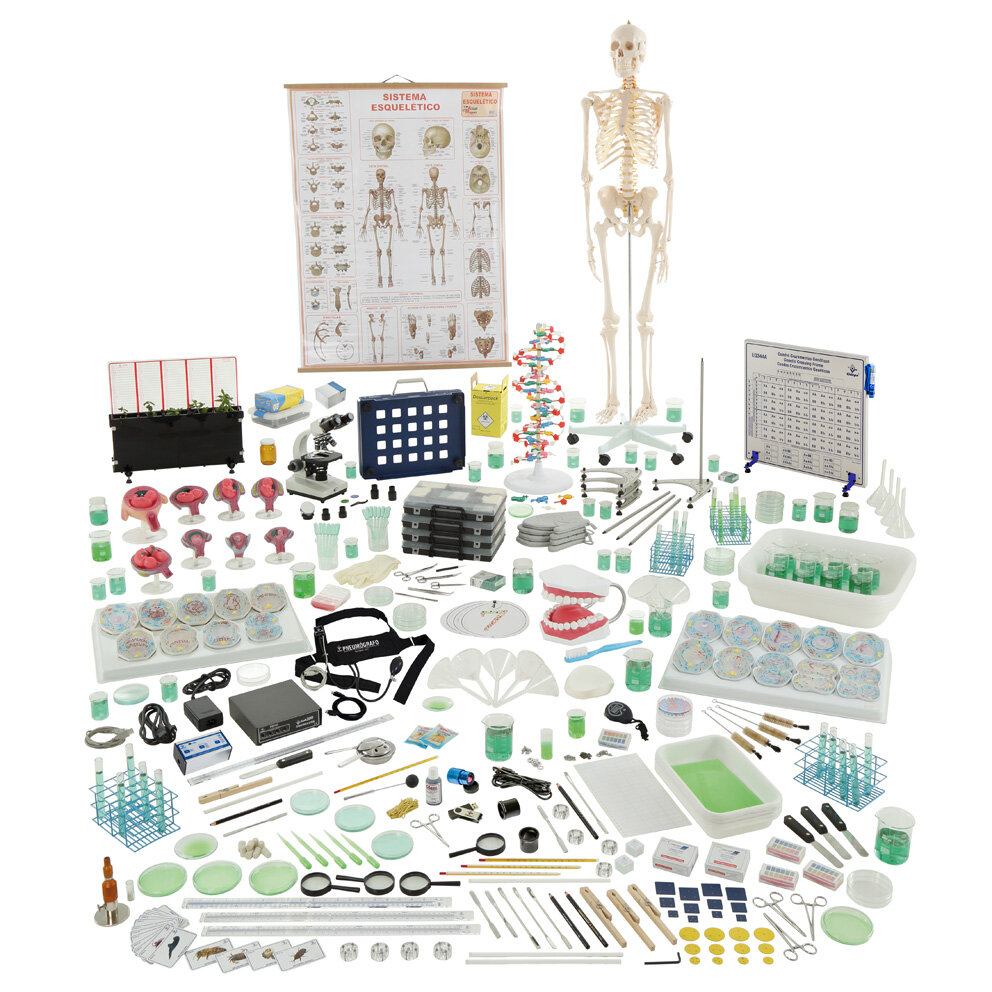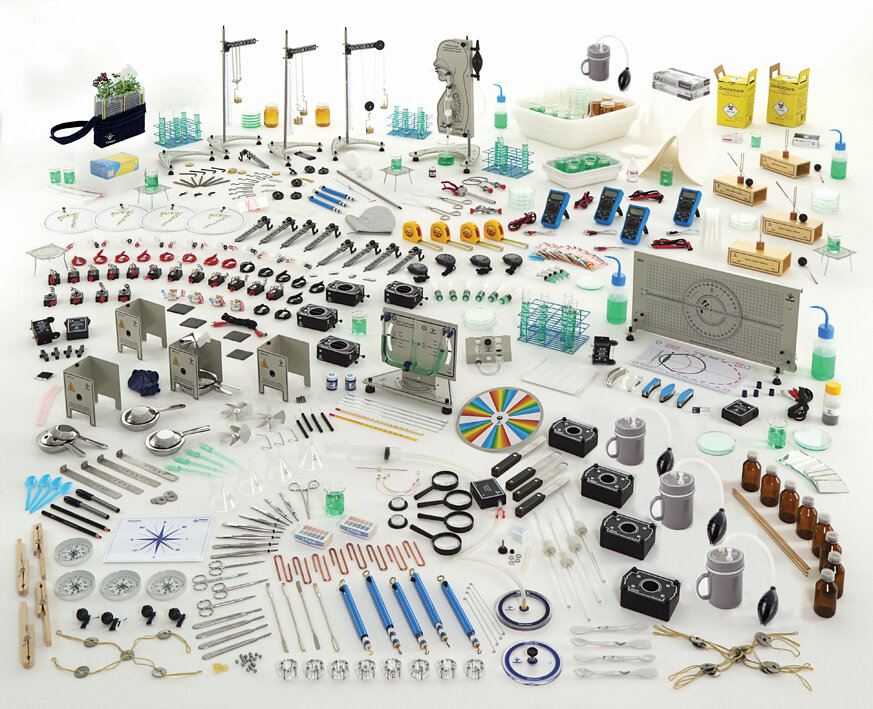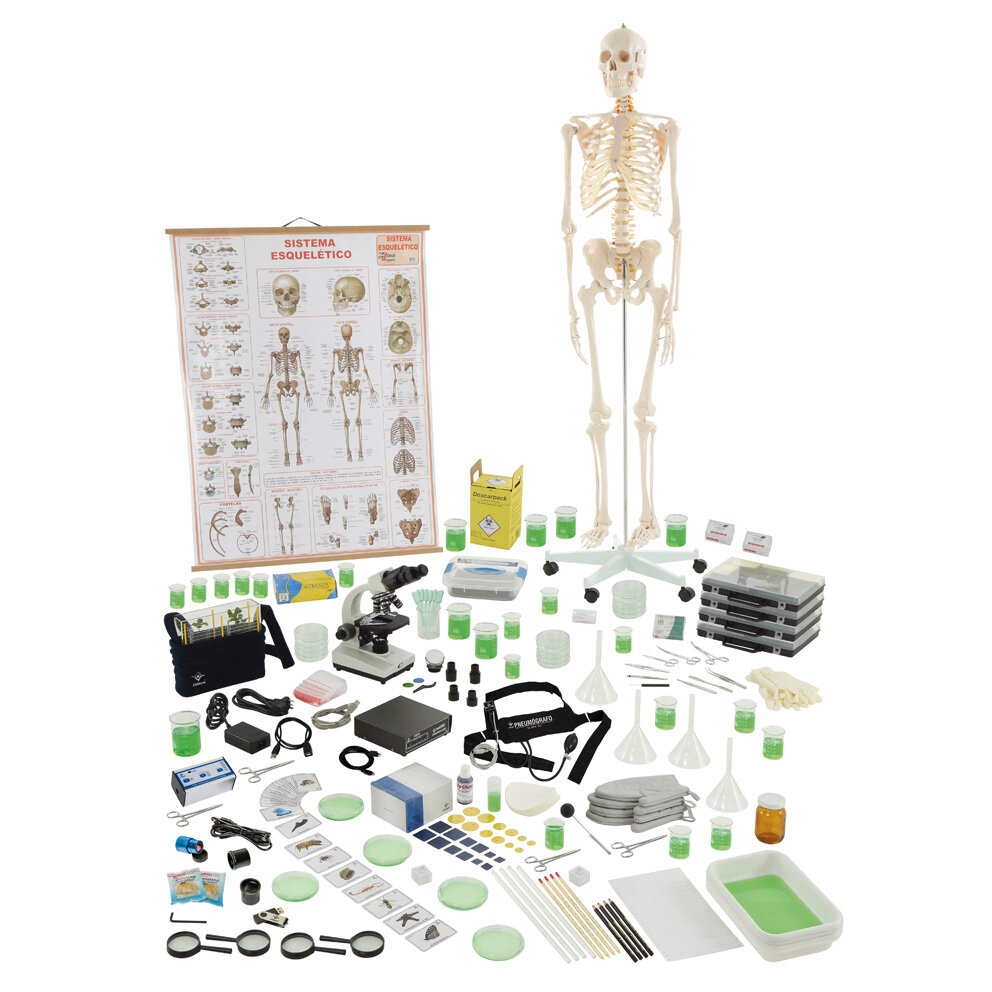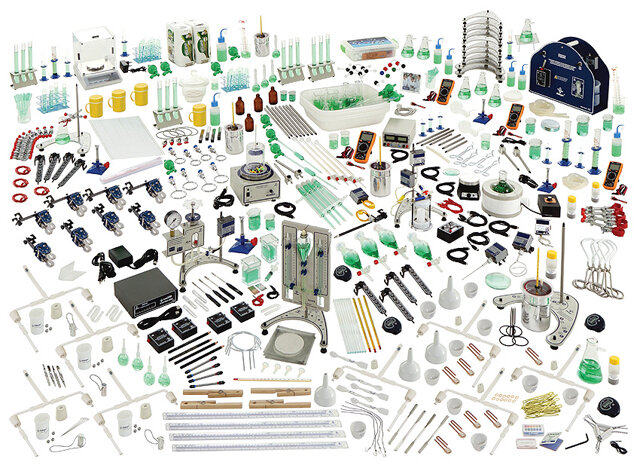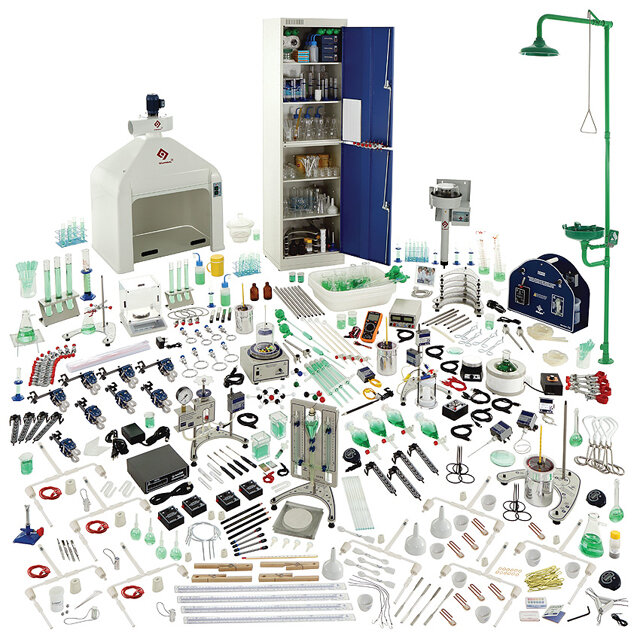
Biology set, for 4 groups
Function
Intended for the study of biological microscopy, fungi, yeast, animals, locomotion, birds, grains, roots, stems, leaves, micrometric sectioning, cells, tissues, muscle, osmosis, enzymes, catalase, pH, lipids, DNA, etc.
Key Experiments
- » General procedures for an experimental class FQB - 1201.003
- » Some QB safety standards. - 1201.003A
- » Some special precautions are taken in the QB laboratory. - 1201.003B
- » Laboratory reports and notebooks FQB. - 1201.003C
- » Procedures for conducting QB experiments. - 1201.003D
- » Some guidelines on cleaning and drying glassware QB. - 1201.005
- » Identifying the parts of a biological microscope - 1505.014
- » How to use a biological microscope? - 1505.011
- » The different tissues of the root, stem, and leaf of the bean. - 1481.444A
- » What are skeletal striated muscle cells like? - 1505.020A
- » What are smooth muscle cells like? - 1505.020B
- » How does catalase work inside plant cells? - 0003.015
- » Is it possible to observe the action of enzymes? - 0003.017
- » How to test the pH of different substances? - 0003.019
- » Which of the food samples contain lipids? - 0003.024
- » How do yeast-like fungi develop in salt and sugar? - 0001.256
- » How do animals support themselves and move? - 1491.006
- » What conditions does the egg provide for the bird to develop? - 0001.240
- » - 2030.010
- » What are buccal cells like? - 1481.009A
- » What is the plant tissue of an onion like? - 1481.010A
- » How can we verify osmosis in plant cells? - 1481.011A
- » How to extract and observe the DNA of a fruit? - 0003.025A
- » What are the different types of starch grains like? - 1481.412A


Details