
 Português
 English
 Español
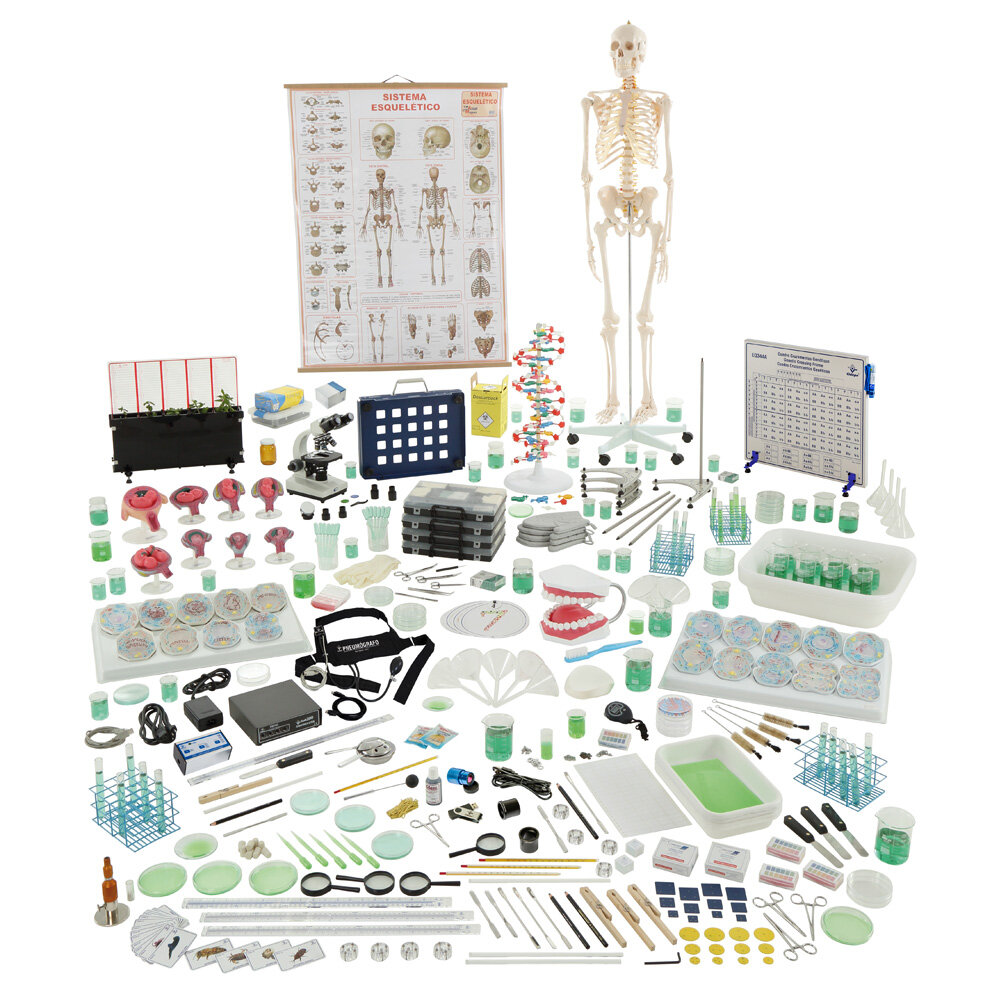
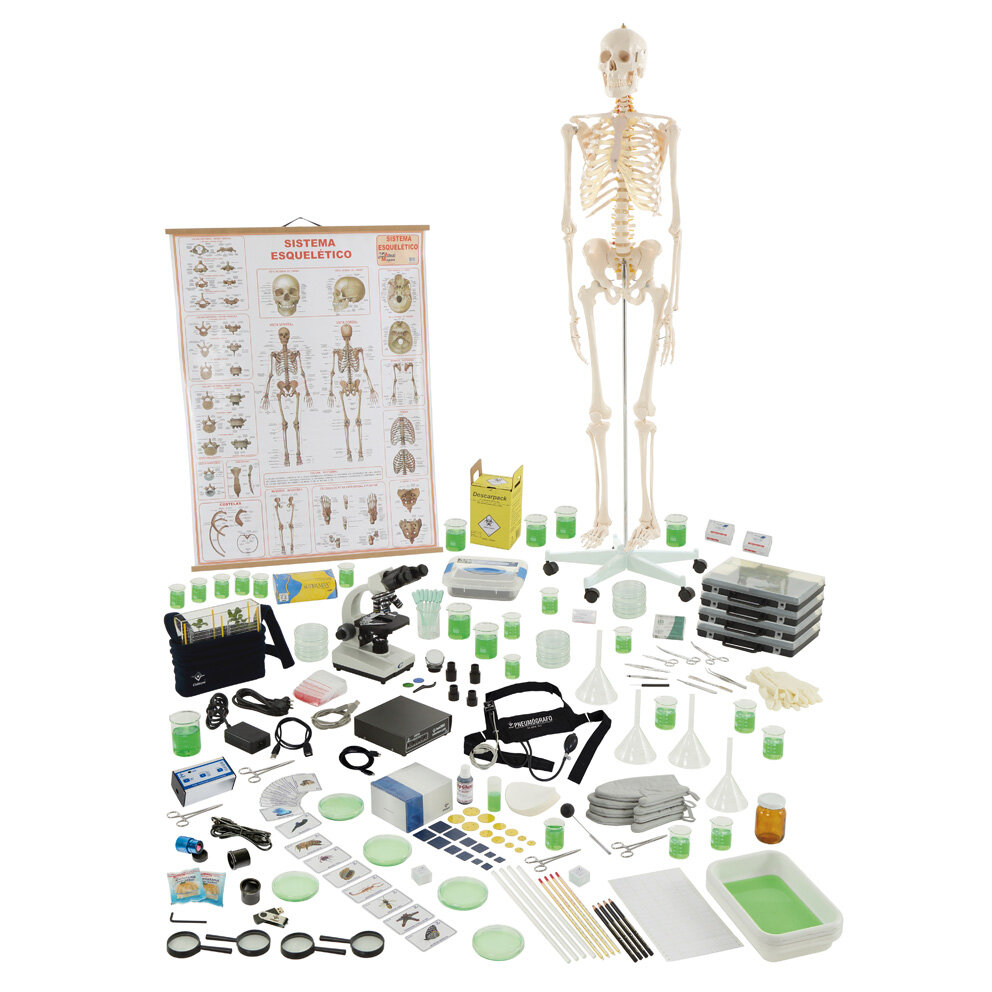
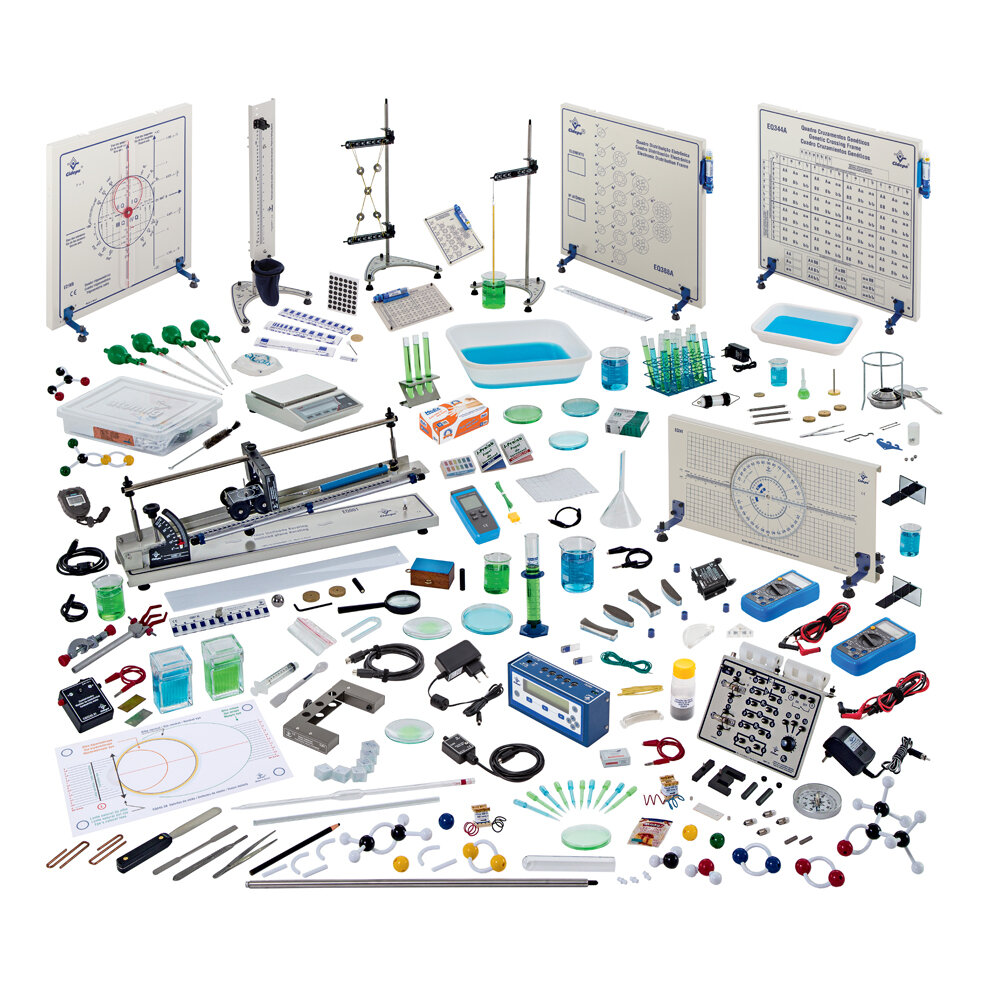
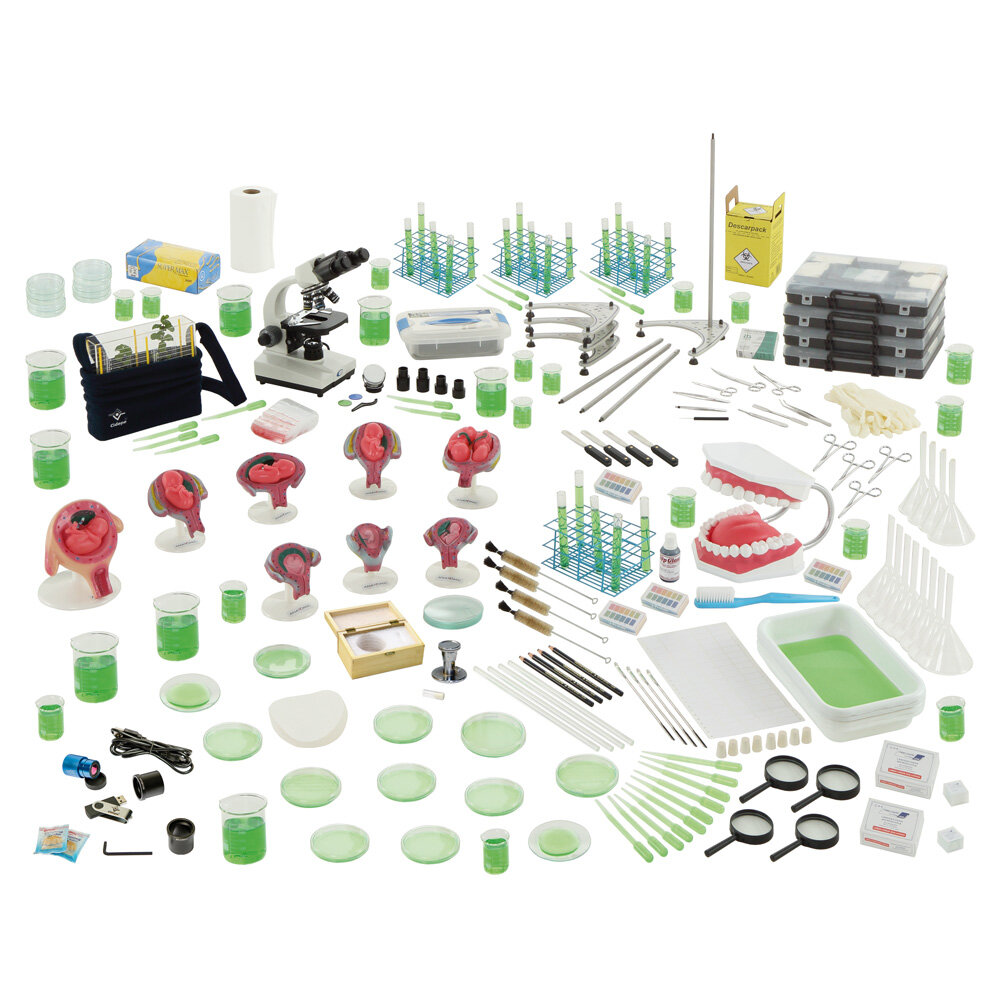
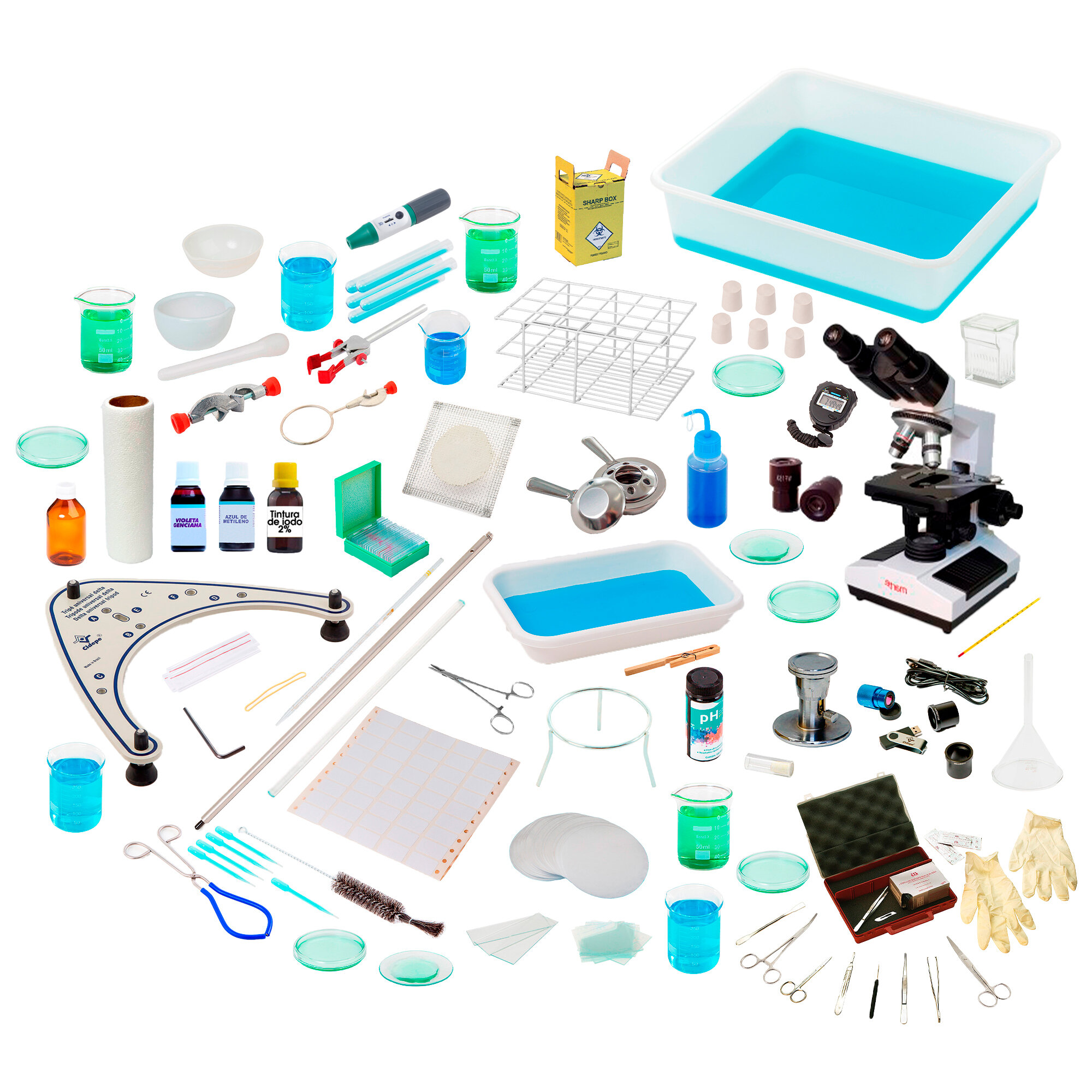
Cell biology, living organisms, soil, and water together.
Code: EQ274B5

Function
Intended for experimental study, science laboratory work, and conducting experiments on: Natural Sciences. Earth and Universe. How to identify humus-rich, sandy, and clayey soils? Earth and Universe. DNA of a fruit, seeds.
Quote product

Main experiments
- Identifying some seeds. 0001.040
- Fruit decomposition due to mold growth. 0001.245A
- How does the water cycle work? 1505.170
- What are stomata like? 0001.173
- How to observe aquatic microorganisms? 0001.360
- Culture and observation of microcrustaceans 0001.361
- What are buccal cells like? 1481.009A
- What is the plant tissue of an onion like? 1481.010A
- How to use a biological microscope? 1505.011
- How can we verify osmosis in plant cells? 1481.011A
- Observing cells of suberous tissue. 1505.012
- What are skeletal striated muscle cells like? 1505.020A
- What are smooth muscle cells like? 1505.020B
- How to extract and observe the DNA of a fruit? 0003.025A
- Observing starch 1481.411A
- What are the different types of starch grains like? 1481.412A
- Locating starch in different substances. 1481.413
- How does catalase work inside plant cells? 0003.015
- Is it possible to observe the action of enzymes? 0003.017
- How to test the pH of different substances? 0003.019
- Which of the food samples contain lipids? 0003.024
- What are the reproductive structures of bryophytes and pteridophytes like? 1505.008B
- How to identify humus-rich, sandy, and clayey soils? 0001.050
- The water contained in the soil. 0001.210
- The water contained in the soil. 0001.210A
- How to separate heterogeneous mixtures using simple filtration? 1212.012_1
- Influence of temperature on catalase enzyme activity 0003.017A