
 Português
 English
 Español
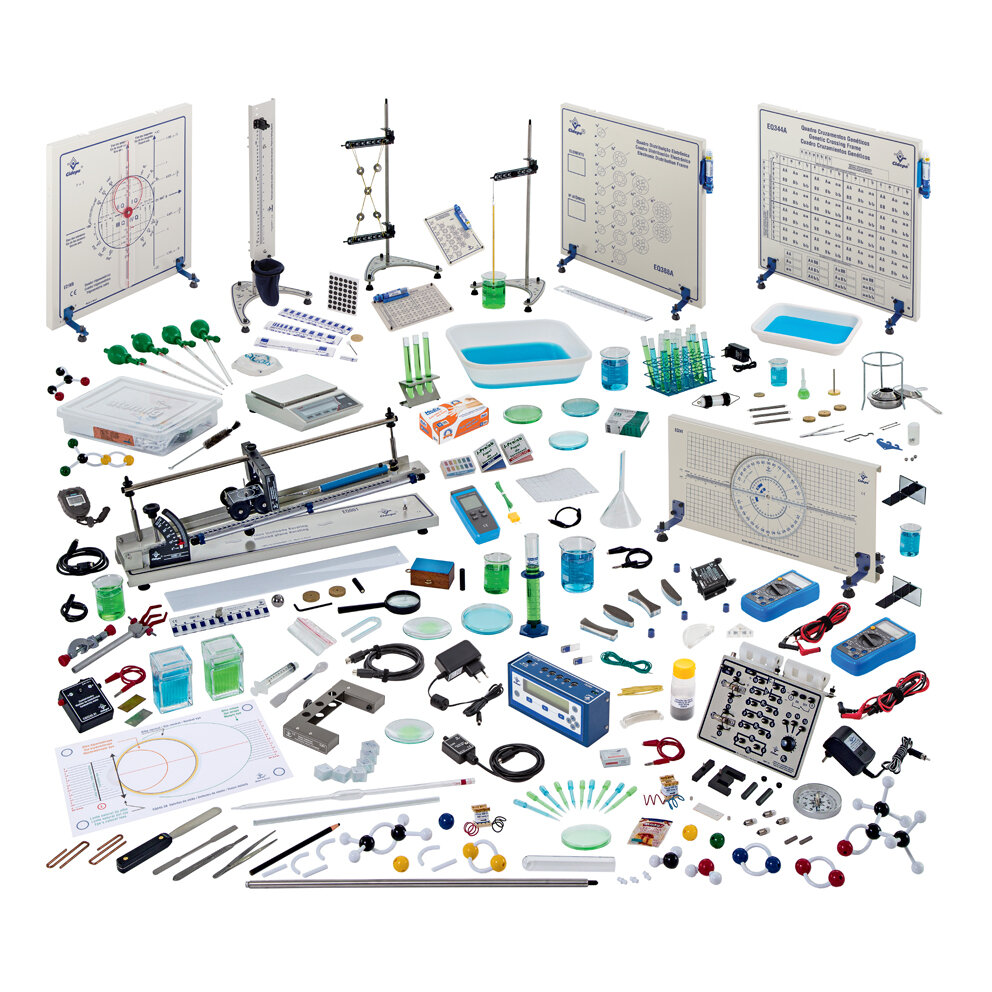
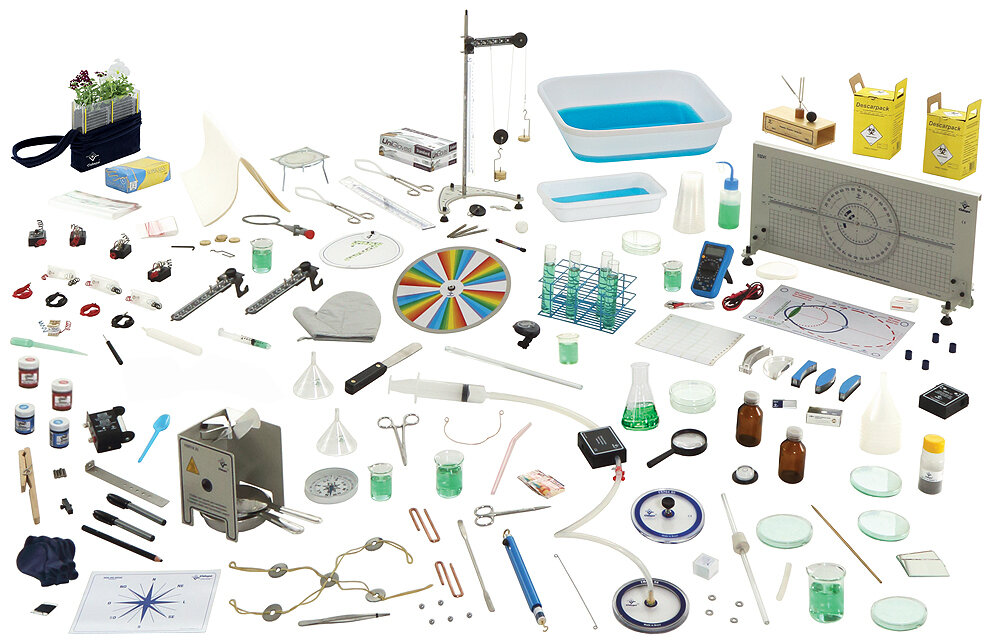
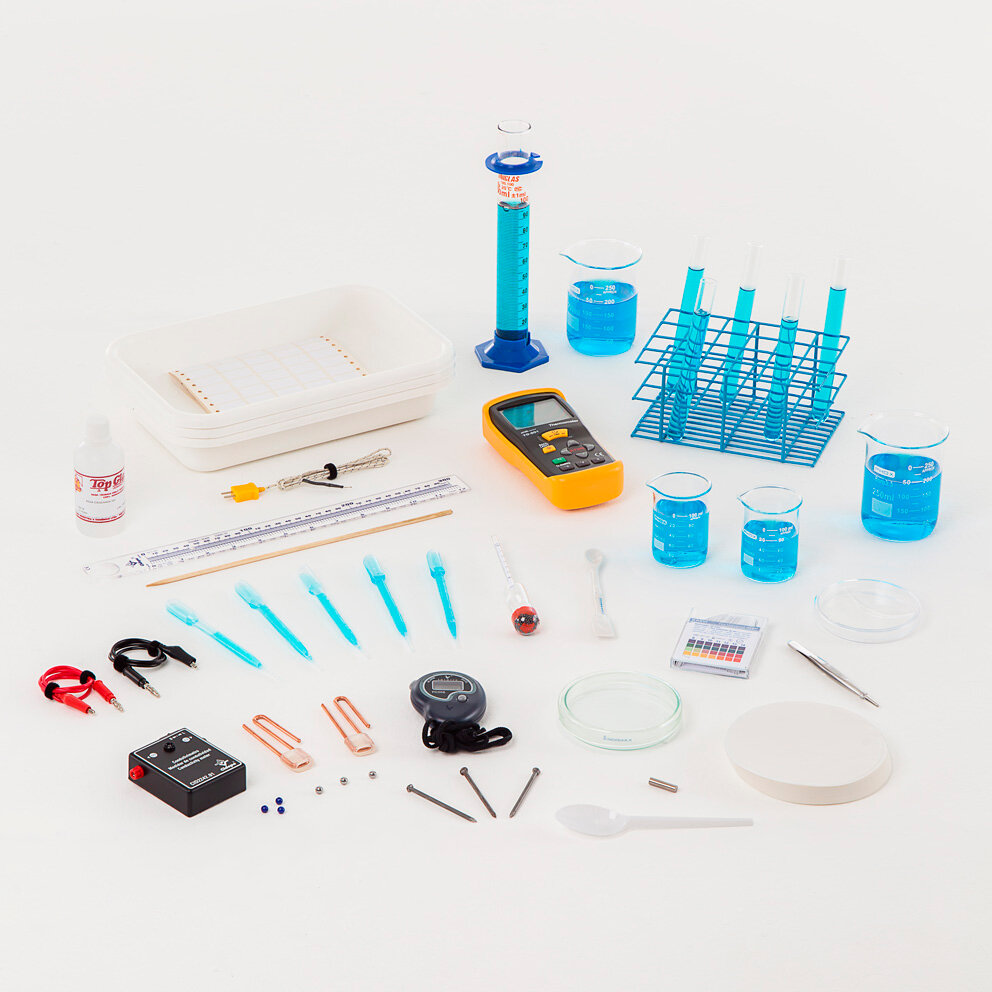
General chemistry, properties of matter and chemical transformations set
Code: SCN-Q001

Function
Intended for experimental study, science or chemistry laboratory, and carrying out experiments on: Chemistry. Properties of materials. How to determine the density of a liquid using a hydrometer? What is meant by specific mass. Relative density. Precautions when measuring density with hydrometers. Separation of mixtures. Separating objects using a magnet. Magnetic force and gravitational force. How to separate homogeneous mixtures through paper chromatography? Adsorption, an interface phenomenon, surface phenomenon. Chemical bonds. How to relate the properties of substances through electrical conductivity? What is an LED conductivity meter? Placing the electrodes in contact with the substances to be tested. Evaluating the electrical conductivity of substances through luminous intensity. Thermodynamics, Calorimetry. Thermal sensation and temperature. Thermal sensations in water at room temperature and heated water. Thermal sensations in water at room temperature, ice water and heated water. Comparing the thermal sensation with the temperature indicated by a thermometer. Chemical reactions. Producing oxygen through a chemical reaction. The glowing splint test. Inorganic functions. How to test the pH of different substances?
Quote product

Main experiments
- Thermal sensation and temperature. 0001.300B
- Separating objects using a magnet 0001.275A
- How to determine the density of a liquid using an anerometer? 1042.036_2A
- Producing oxygen through a chemical reaction. 0001.125A
- 1212.014_A_1
- How can we relate the properties of substances through electrical conductivity? 1222.012_A_1
- How do you test the pH of different substances? 0003.019