
 Português
 English
 Español
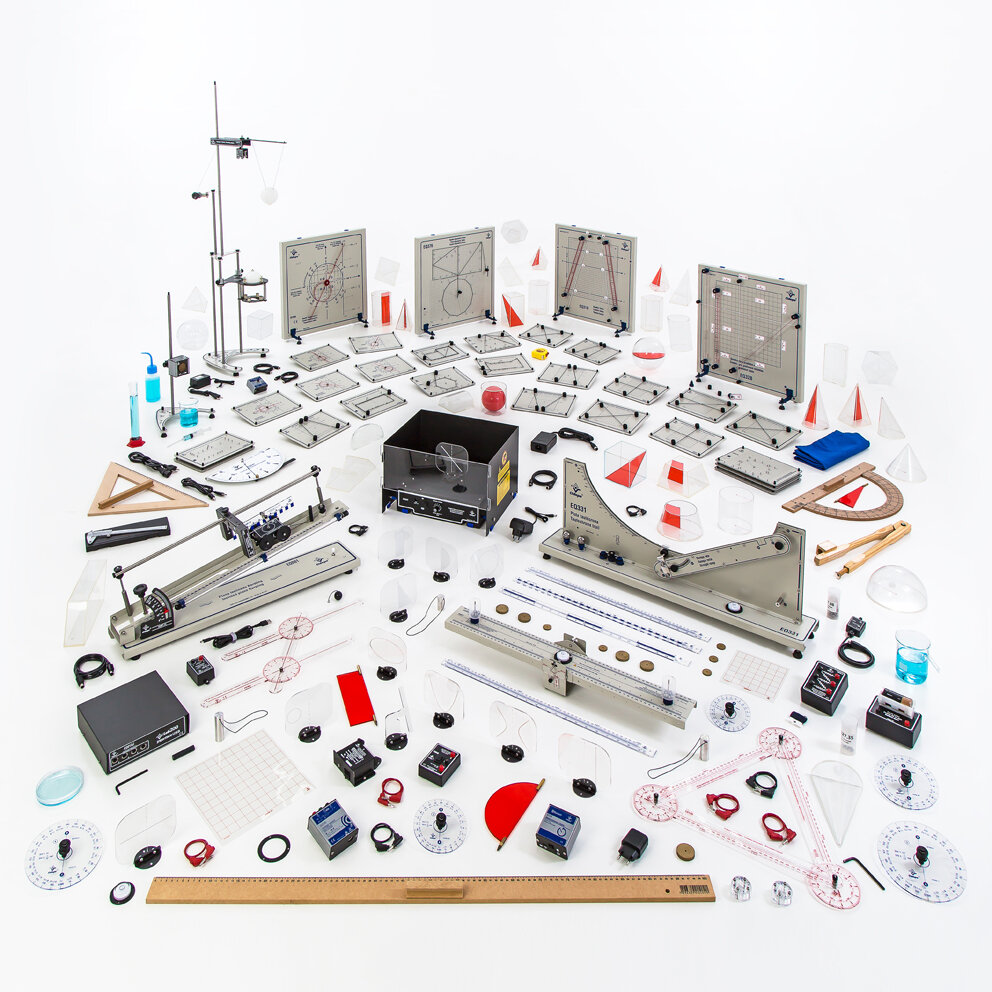
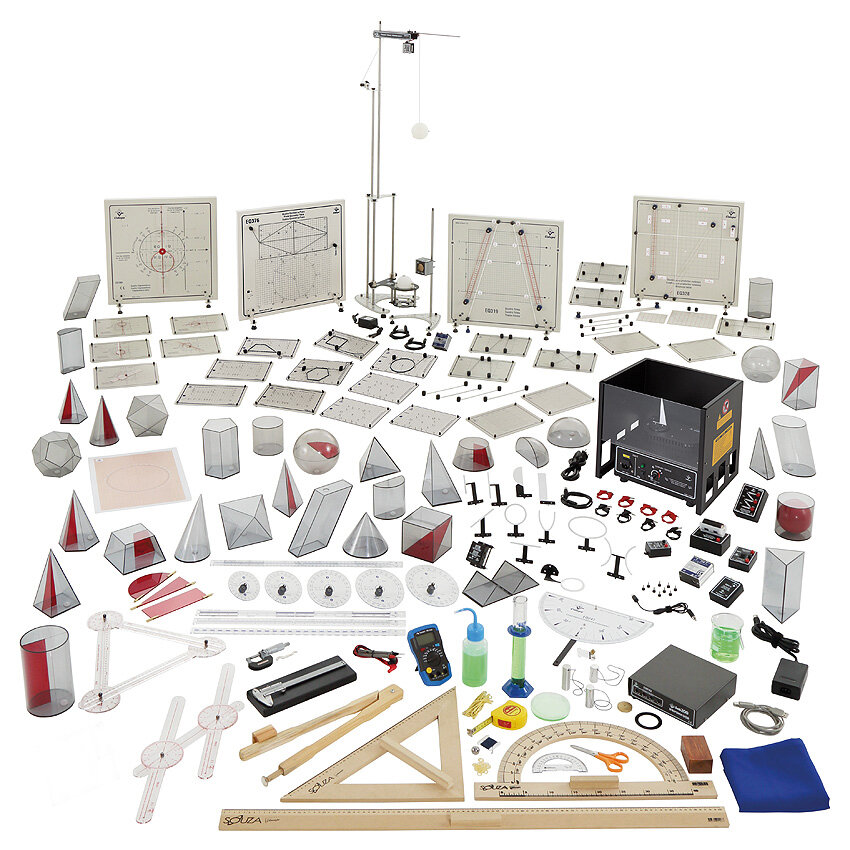
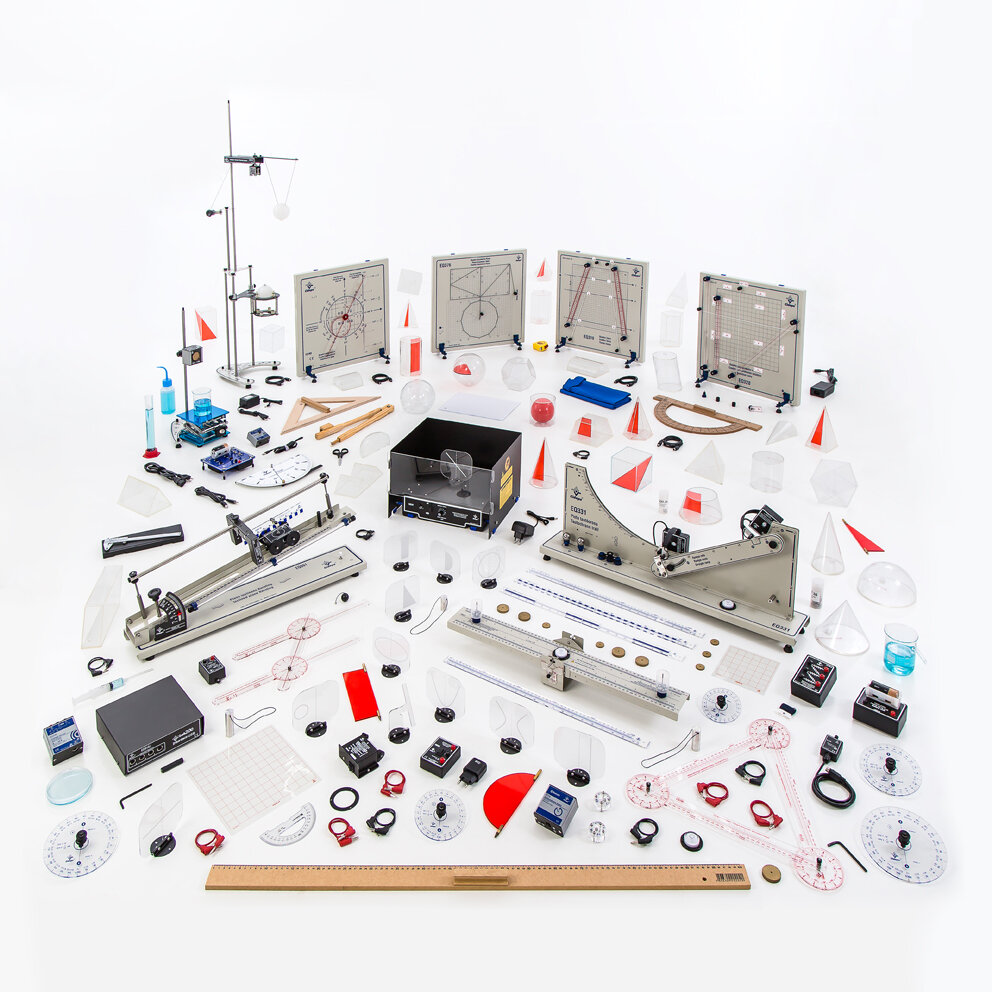
Master unit of Mathematics, Bluetooth Multi-timer, interface and software
Code: EQ129LJM1

Function
Intended for experimental study, mathematics laboratory work, and conducting mathematical experiments on: Metrology. Significant figures and uncertainties. Functions. What are the characteristics of the graph of an affine function? Positive slope. Negative slope. What are the characteristics of a quadratic function? What are the characteristics of a sinusoidal function? The exponential function. Trigonometry. The angular properties of triangles. The fundamental trigonometric relations of the right triangle. The Pythagorean theorem. The law of sines and cosines. The clinometer. The degree, the radian, the quadrants and their conversions. The sine, cosine, and tangent in the trigonometric circle. The fundamental trigonometric relation. Algebra. First-degree equation with one unknown and the additive and multiplicative principles of equalities. First-degree inequality with one unknown and the additive and multiplicative principles of inequalities. Ratio, how to compare by means of division. Proportion and the directly proportional relationship. The inversely proportional relationship. Notable products. Plane and metric geometry. How to obtain polygonal lines, quadrilateral and trilateral polygons and their perimeters. How to obtain the areas of rectangle, square and triangle polygons? How to obtain the areas of parallelogram, trapezoid and rhombus polygons? The relationships between the angles formed by parallel lines intersected by a transversal line. Thales' Theorem. How to obtain the number pi in the circumference? Analytical geometry. The brachistochrone characteristic of the inverted cycloid. The tautochrone characteristic of the inverted cycloid. Spatial and metric geometry. Area of the regular hexahedron, the cube. Right and oblique prisms, the area of the right quadrangular prism (parallelepiped). The right prism and the oblique prism, the area of the right quadrangular prism (parallelepiped). Regular right and irregular pyramids, the area of the regular right pentagonal pyramid. The regular right pyramid and the irregular pyramid, the area of the regular right pentagonal pyramid. The area of the right circular cylinder. The sphere and the area of the sphere inscribed in a cylinder. The area of the sphere inscribed in a cylinder. The external, internal, and wall volumes of a hollow cube. The pyramids, the external, internal, and wall volumes of a hollow regular pentagonal pyramid. The external, internal, and wall volumes of a hollow regular pentagonal pyramid. The prisms, the external and wall volumes of a hollow right quadrangular prism. The external, internal, and wall volumes of a hollow right quadrangular prism. The solid of revolution obtained by rotating a rectangle, the right cylinder. The solid of revolution obtained by rotating a right triangle, the right cone. Sectioning the right cone of revolution with planes of different inclinations, conic sections. The solid of revolution obtained by rotating a semicircle, the sphere. The shell or surface of the double right circular cone and the plane conic sections. A straight cylindrical shell or surface of revolution due to rotation of a vertical line. A circular shell or surface, rotation of a horizontal line. A toroidal shell or surface of revolution, rotation of a circle around an axis far from the center. A spherical shell or surface of revolution, rotation of a circle around one of its diameters. A circular parabolic shell or surface of revolution, rotation of a parabola around a central axis. An ellipsoidal shell or surface of revolution, rotation of an ellipse around one of its diameters. A hyperboloid shell or surface of revolution, rotation of a vertical hyperbola around its central axis. A hyperboloid shell or surface of revolution, rotation of an inclined line around an axis far from the center. Probability. The probability of random events, etc.
Quote product

Main experiments
- Significant figures and uncertainties. 1032.003_0
- What are the characteristics of the graph of a linear function? Positive slope. 1400.000BT
- What are the characteristics of the graph of a linear function? Negative slope. 1400.000ABT
- The quadratic function, the parable 1400.045
- The sine function, the sinusoid 1400.051
- What are the characteristics of a quadratic function? 1400.102BT
- 1400.110IN
- The angular properties of triangles. 1400.025
- The fundamental trigonometric ratios of the right-angled triangle. 1400.030
- Pythagorean theorem, a metric relationship between the sides of a right-angled triangle. 1400.035
- The law of sines and the law of cosines in a right-angled triangle. 1400.040
- Using a clinometer to measure the height of a distant object. 1400.240
- Degrees, radians, quadrants and their conversions, with panel. 1072.006_A
- The sine function in the trigonometric circle, a sinusoidal function, with a panel. 1072.006_B
- The cosine function on the trigonometric circle, with a panel. 1072.006_C
- The tangent in the trigonometric circle, with panel. 1072.006_D
- The fundamental trigonometric relationship in the trigonometric circle, with panel. 1072.006_E
- First-degree equation with one unknown and the principles of addition and multiplication of equalities. 1400.201
- First-degree inequality with one unknown and the principles of addition and multiplication of inequalities. 1400.202
- Reason, a way to compare through division. 1400.203
- Proportion and directly proportional relationship. 1400.204
- An inversely proportional relationship. 1400.205
- The notable product of the square of the sum of two terms, with a panel. 1400.211
- The notable product of the square of the difference of two terms, with panel. 1400.212
- How to obtain polygonal lines, quadrilateral and trilateral polygons and their perimeters, using a panel. 1400.235
- How to find the areas of rectangles, squares, and triangles? Using a panel. 1400.236
- How to find the areas of parallelogram, trapezoid, and rhombus polygons? Using a panel. 1400.237
- The relationships between the angles formed by parallel lines cut by a transversal. 1400.020
- Thales' Theorem, intersection, ratio and proportion, with panel. 1400.231
- Thales' Theorem and similar triangles, with a panel. 1400.233
- The Pythagorean theorem, with a panel. 1400.213
- How to obtain the value of pi in a circle? 1400.005B
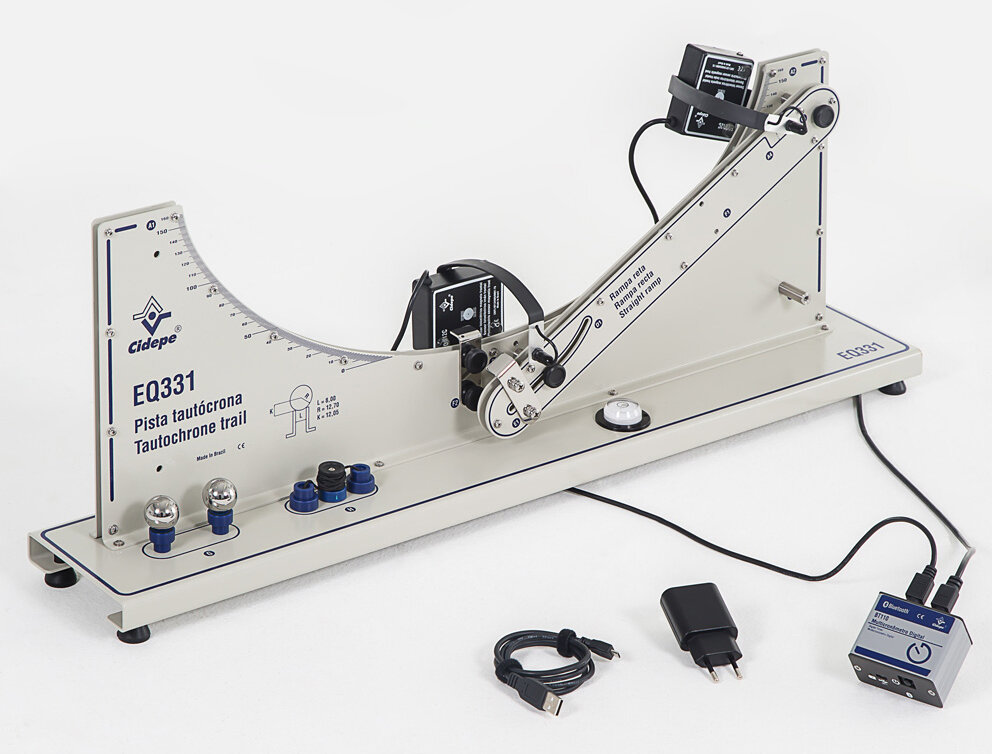
- Is the shortest path always the fastest? The brachistochrone characteristic of the inverted cycloid. 1400.228
- Does travel time always depend on the distance between two points? The tautochronous characteristic of the inverted cycloid. 1400.229
- How can I obtain a cycloid curve using free software? 1400.225
- Area of the regular hexahedron, the cube. 1400.006A
- Right and oblique prisms, the area of a right quadrangular prism, and a parallelepiped. 1400.006C
- The oblique rectangular prism and the right-angled square prism, right-angled parallelepiped and its area. 1400.006C1
- Regular right pyramids and irregular pyramids, the area of a regular right pentagonal pyramid. 1400.006D
- The regular right pyramid and the irregular pyramid, the area of the regular right pentagonal pyramid. 1400.006D1
- The area of a right circular cylinder. 1400.006H
- The sphere and the area of the sphere inscribed in a cylinder. 1400.006J
- The area of the inscribed sphere in a cylinder. 1400.006K
- The external, internal, and wall volumes of a hollow cube. 1400.008
- The pyramids, the external and internal volumes, and the walls of a hollow pentagonal regular pyramid. 1400.009
- The external, internal, and wall volumes of a hollow, regular pentagonal pyramid. 1400.009A
- The prisms, the external and wall volumes of a hollow, right quadrangular prism. 1400.011
- The external, internal, and wall volumes of a hollow, right-angled, square prism. 1400.011A
- 1400.007A1
- 1400.007B1
- 1400.007D1
- 1400.007E1
- 1400.007F1
- 1400.007G1
- 1400.007H1
- 1400.007I1
- 1400.007J1
- 1400.007K1
- 1400.007L1
- 1400.007M1
- 1400.007N1
- The probability of random events. 1400.250